
Nearly a third of UK employees (31%) say money worries have negatively affected their performance at work, according to the CIPD's Good Work Index 2025. Almost one in five have lost sleep over money. These employees aren't only dealing with financial pressure. Their mental health can suffer too, and each can make the other harder to manage.
This guide explains how financial stress affects mental health, what it means for your organisation and how to build support that reaches people before the pressure spirals.
How does financial stress affect mental health?
Money worries rarely stay in the background. The NHS links them to anxiety, low mood, sleep problems and feelings of guilt or shame, particularly for people who feel they aren't earning enough.
Poor mental health can also make financial difficulties more challenging. Anxiety and depression can affect concentration, motivation and decision-making, making it harder to manage bills, plan a budget or seek financial advice. Some people may start avoiding the problem altogether, such as leaving post unopened or putting off a call to a lender. This can allow financial problems to build up and make them harder to manage. That's why financial worries and poor mental health can reinforce each other.
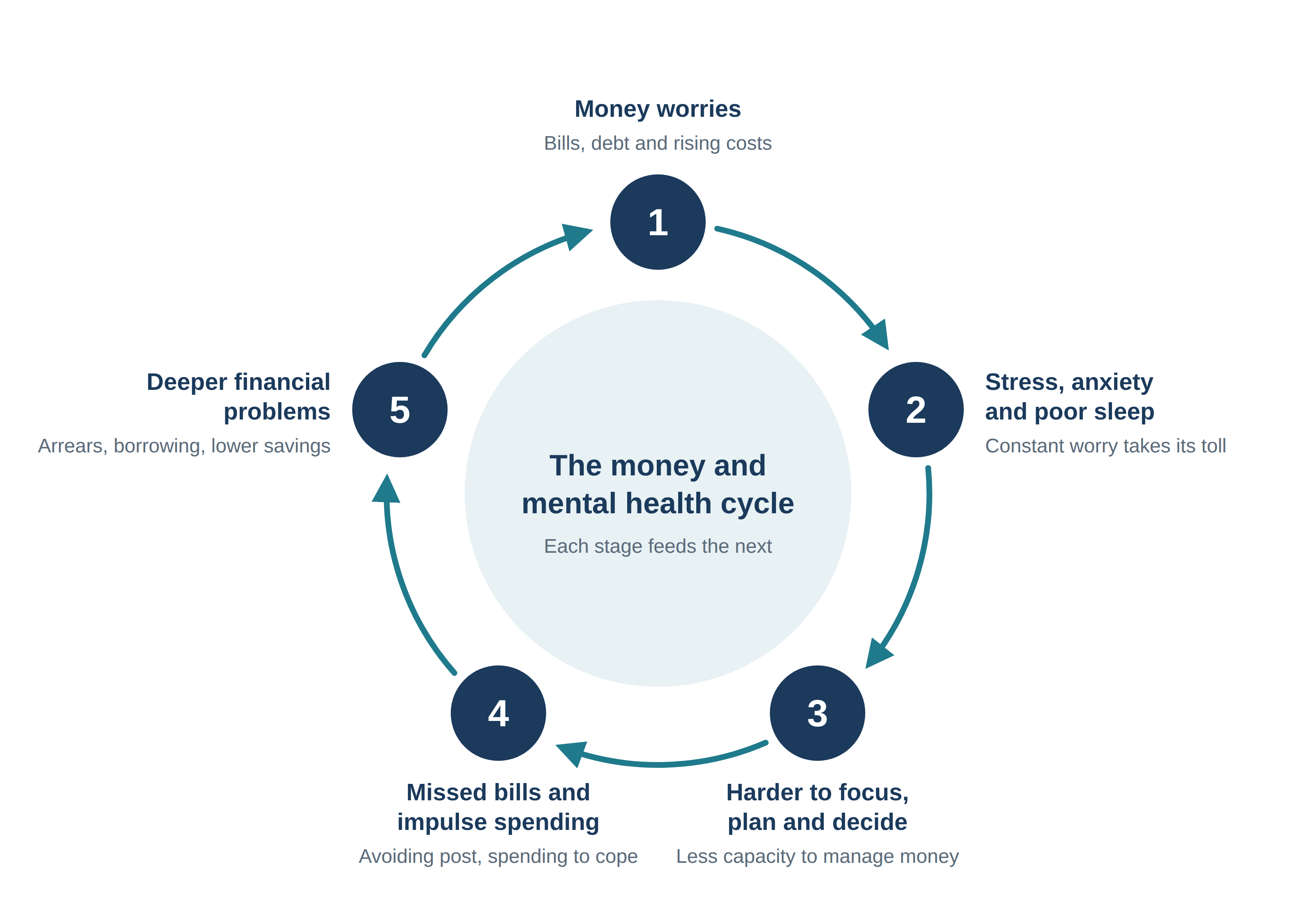
What financial stress costs your organisation
Mental Health UK's Burnout Report 2026 found that 48% of UK adults said money worries had caused them stress outside work. Money worries don't stay at home. They show up in your absence data, your productivity and your turnover.
Absence: employees that experience financial stress may be more likely to take time off to deal with urgent money problems, or because stress has started to affect their health.
Presenteeism: employees may continue working but find it harder to focus. In the CIPD's research, 13% said money worries made it hard to concentrate or make decisions at work.
Mistakes and poor decisions: tired, distracted employees may be more likely to make errors, which can create additional risks in safety-critical and customer-facing roles.
Turnover: employees whose pay doesn't cover their essential costs may be more likely to look for better-paid work elsewhere.
How to recognise financial stress in your employees
Employees may not feel comfortable discussing financial difficulties at work. Changes in behaviour or performance may indicate that someone needs additional support.
Possible signs include:
- Changes in attendance, concentration or usual work performance
- Increased requests for overtime, extra shifts or salary advances
- Opting out of the pension scheme or asking to reduce contributions
- Concerns about pay dates, deductions or unexpected expenses
- Withdrawing from activities that involve additional costs
These signs don't necessarily mean that someone is experiencing financial problems. They may also be related to burnout, caring responsibilities or health issues. The aim isn't to diagnose, but to recognise when someone may need support and start a conversation.
Six steps to support financial wellbeing and mental health
You can't control the cost of living, but you can make it easier for employees to get help before money worries affect their mental health, or poor mental health makes financial problems harder to manage.
1. Find out what your people need
Start by identifying the financial challenges your employees face. Use anonymous surveys to understand their concerns and review benefits uptake and employee feedback to identify gaps in your existing support.
Avoid assuming that financial stress only affects your lowest-paid employees. Consider different circumstances across your workforce, including housing costs, caring responsibilities and unexpected expenses. Use this information to prioritise the support your people need.
2. Get the basics right on pay
Employee benefits can help reduce financial pressure, but they cannot compensate for pay that doesn't cover essential living costs. Review your pay structures, particularly for lower-paid employees, to identify where improvements could make a meaningful difference.
Pay employees accurately and on time, and provide clear information about payslips, deductions and any changes to their salary.
3. Make every route lead to both kinds of help
An employee might take their problem to HR, their line manager, your employee assistance programme (EAP) or your benefits platform. Whichever route they choose, they should find both financial and mental health support without having to start again somewhere else.
To make this work in practice:
- Check what your EAP covers: depending on the provider, your EAP may include counselling, debt advice or referrals to specialist financial services. If it offers both, say so clearly
- Cross-promote your support: put financial guidance on your mental health pages and mental health support on your financial wellbeing pages
- Give managers one signpost: managers don't need to be money or mental health experts. They need to know where to point someone and how to do it without asking for personal details
4. Reduce the effort it takes to ask for help
Anxiety can make difficult tasks feel harder, including asking for help with money. Every extra step, such as completing a form, logging in or speaking to a manager, can make employees more likely to put it off.
Keep access confidential and simple: one place to find support that employees can access on a personal phone, with no need to explain circumstances to anyone at work first. Financial education and guidance should work the same way, so employees can learn about budgeting or managing debt privately, at their own pace.
5. Time your support around pressure points
Financial pressure follows a calendar. Map the moments when it peaks for your workforce and plan a short message for each one, so support reaches people when they need it most.
Start with the points most employers share:
- January: Christmas spending can put additional pressure on household budgets. Remind employees about debt guidance and your EAP in the first week back, not at the end of the month
- The week before payday: money is tightest for people who live payslip to payslip. Schedule a reminder about discounts, financial guidance and confidential support a few days before each pay date
- Autumn and winter: higher energy bills and back-to-school costs arrive together. Use September to point people to budgeting help before the cold months start
6. Offer benefits that help reduce financial pressure
Employee benefits cannot solve every financial difficulty, but they can lower everyday costs and provide practical support when unexpected circumstances arise:
- Employee discount schemes: help employees save on everyday purchases, including groceries and other essentials
- Employee health benefits: health cash plans, dental cover and private medical insurance can help employees manage medical expenses and access additional healthcare services
- Salary sacrifice schemes: can help employees spread the cost of eligible products or services, such as a bike for commuting, while potentially saving on tax and National Insurance. Show the effect on take-home pay upfront, so people can decide what works for their budget
- Financial protection benefits: income protection and critical illness cover can help employees manage the financial impact of serious illness or injury. Occupational sick pay can provide additional income during periods of sickness absence.
- Earned wage access: allows employees to access some of their earned pay before payday, which can help with unexpected expenses and reduce reliance on short-term borrowing. Make sure employees understand any fees or limits that apply.
Make sure employees understand which benefits they can use and how to access them. Communicate what's available throughout the year, not just during enrolment, so your people know where to turn when they need help.
Break the cycle between money and mental health
FlexGenius brings your financial wellbeing and mental health benefits together in one place, so employees can easily find and access the support they need. Targeted communications help you reach the right people at the right moments, from new starters to employees returning from parental leave.
Download the brochure or book a demo to see the FlexGenius employee benefits platform in action.