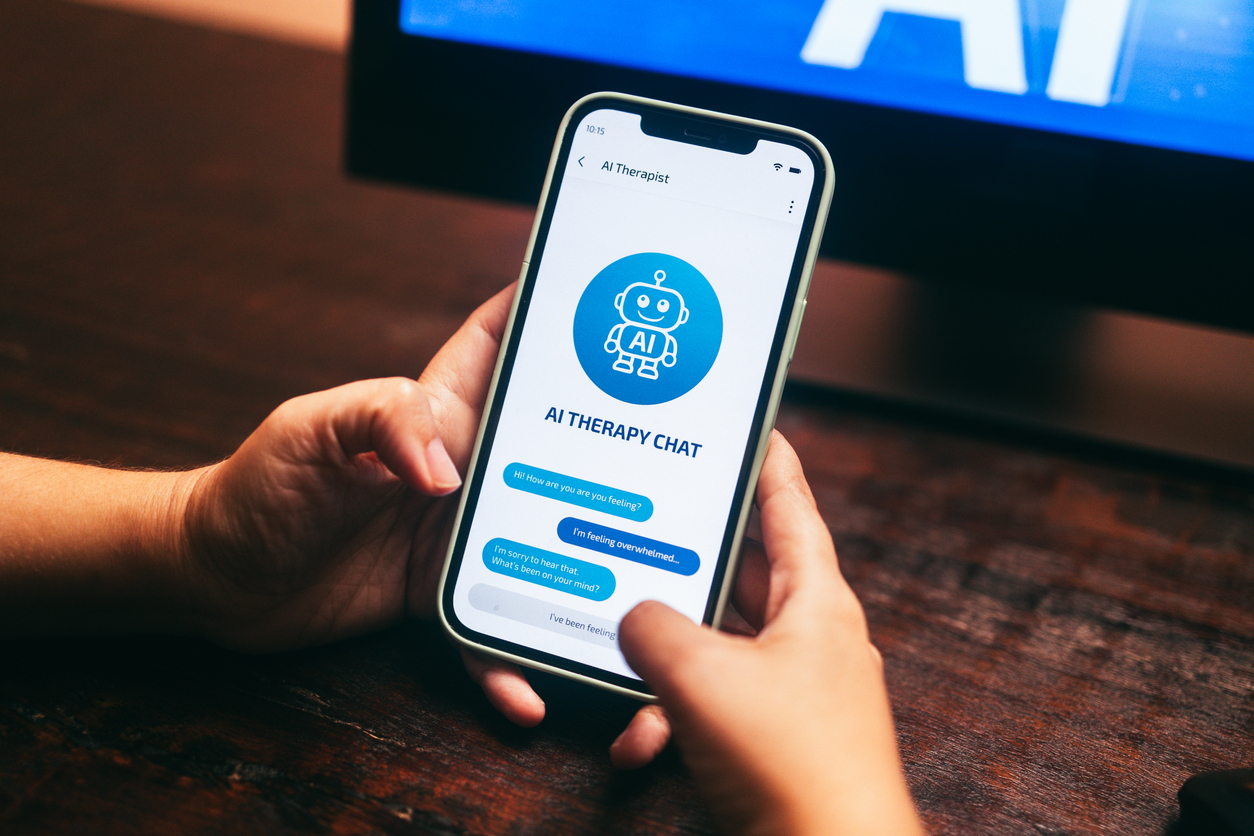
Employees are already turning to AI chatbots like ChatGPT for reassurance and support with workplace stress, often without their employer knowing. This leaves HR with a crucial question: how do we support them safely and responsibly?
According to Mental Health UK, more than one in three adults (37%) have used an AI chatbot for mental health or wellbeing support, a behaviour that is emerging independently of employers.
This means that even organisations that choose not to introduce wellbeing AI tools must still be prepared for employees using them privately.
At the same time, a growing number of employers are exploring whether AI could play a role in their wellbeing strategy, increasing the need for clear guidance, risk awareness and responsible oversight.
For HR leaders, the core challenge is not whether to promote or even implement AI, but how to protect and support employees who are already engaging with it.
The pros: accessibility, immediacy and early support
Used thoughtfully, AI chatbots can offer valuable early-stage support for low-level workplace concerns such as stress or workload pressure, enabling employees to access help quickly and discreetly.
- Approachable early support
With 24/7 availability, AI tools provide instant responses. An employee lying awake with late-night anxiety may find prompt reassurance rather than waiting until morning, potentially preventing issues from intensifying.
- Lower emotional barriers
Some employees, especially younger ones, may feel safer opening up to an AI tool than to a manager or colleague, helping them express concerns earlier.
- Thought reframing and structured guidance
AI can offer reflective prompts, mood check-ins and guided pathways that encourage new perspectives on workplace challenges.
- Early prevention and safe signposting
When used responsibly, AI can encourage early help-seeking and direct individuals to qualified professionals when the issue requires clinical expertise.
The cons: limits in empathy, expertise and safety
However, these benefits come with limitations, and sometimes significant risks, particularly when employees turn to AI for support it is not designed to provide.
- Lack of clinical expertise
AI tools are not clinically trained and cannot detect trauma, complex emotional cues or crisis situations.
- Potential for inaccurate or harmful advice
AI outputs may contain inaccuracies or bias in their training data and could make things worse. Mental Health UK found that 11% of adults felt more anxious or depressed after using mental health chatbots.
- No safeguarding or accountability
Unlike qualified professionals, AI tools are not bound by clinical or safeguarding standards and cannot be held accountable.
- Privacy and data concerns
Employees may share sensitive personal details without fully understanding how their information is stored or used.
- Risk of overreliance
Some individuals may turn repeatedly to AI instead of accessing human support, delaying necessary intervention.
Finding the right balance: what HR leaders should do
Wherever an organisation is on its AI adoption journey, HR’s priority is to set clear expectations, safe practices and escalation routes for employees who choose to use AI. This helps manage risk while supporting employees who are already experimenting with these tools.
- Listen to employee needs
Engage with staff, including those with lived mental health experience, to understand how AI is being used and perceived.
- Provide clear internal guidance
Help employees understand when AI may be useful, when it should not be relied on, how to use it safely, and how to escalate concerns to trained professionals.
- Ensure data transparency
Clarify how any digital wellbeing tools collect, store and use information. Transparency is essential for building trust.
- Champion inclusivity and access
Make sure digital tools do not create barriers and that human-led support remains easily available to all employees.
- Keep human connection at the centre
If AI is used at all, it should remain a supplementary early-stage option. Employees must always have clear, accessible routes to real people for meaningful support.
- Maintain a strong, non-digital wellbeing offer
Ensure employees can still access robust human-led services, EAPs, trained managers, mental health first aiders and clinical practitioners, so that technology enhances, rather than replaces, comprehensive wellbeing support.
If an organisation chooses to adopt AI tools
Any organisation considering digital wellbeing tools must ensure they are clinically overseen, grounded in evidence-based practice and independently evaluated. Tools should have clear use cases and transparent limitations. If reliable evidence is lacking, they should not be adopted.
The future of AI and mental health at work
AI will continue shaping how employees seek informal support, whether employers adopt it formally or not. HR’s responsibility is to stay informed, maintain strong governance and ensure all use of AI (formal or informal) is backed by clear boundaries, safe escalation routes and dependable human support.
AI can play a valuable role in early-stage wellbeing conversations, but it must sit within a broader, clinically sound and human-led wellbeing strategy.
How FlexGenius helps employers build a safer, stronger wellbeing ecosystem
While AI can offer speed and convenience, employees ultimately need access to real, dependable, human-centred wellbeing support. FlexGenius helps organisations create that foundation with a comprehensive suite of health and lifestyle benefits, including mental health support, financial wellbeing tools, preventative health options, family support services and flexible benefits that employees can tailor to their needs.
By making benefits simple to access and easy to personalise, FlexGenius strengthens resilience, boosts engagement and reduces pressure on HR teams, providing a practical, people-first foundation that complements, rather than replaces, emerging technologies like AI.
If you’re looking to strengthen your wellbeing strategy, or need support guiding employees safely through the rise of AI, FlexGenius can help.
Get in touch: Book a demo, email enquiries@flexgenius.co.uk or call 0800 652 4745 to discover how our flexible benefits platform can support your people, enhance resilience and build a wellbeing offering that truly works.