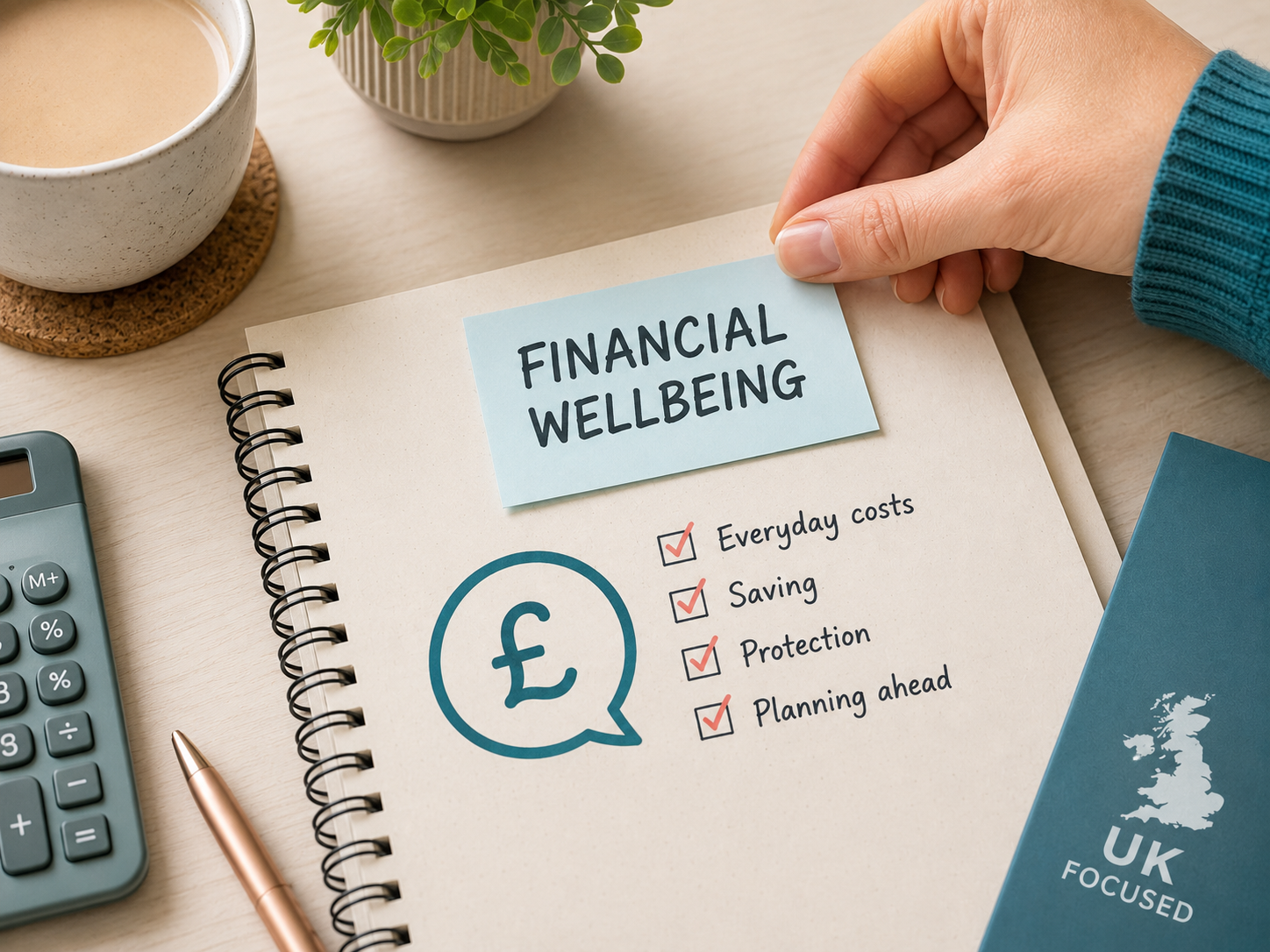
Before you add another benefit, take a fresh look at what you already offer. Here are five ways to turn existing benefits into more meaningful financial wellbeing support.
Money worries do not stay at home when employees arrive at work. They affect concentration, energy, sleep, stress and performance. CIPD research found that almost a third of workers said money worries had negatively impacted their work performance, including almost a quarter of those earning more than £60,000.
That can leave HR and reward leaders feeling they need to do more. But the answer is not always to add another benefit, introduce a new policy or create a standalone financial wellbeing strategy.
In many organisations, the building blocks are already there.
The key is to think of financial wellbeing as an ecosystem, rather than a single benefit or initiative. It is the combination of support that helps employees manage money today, protect themselves from financial shocks and build confidence for the future.
Look across your existing benefits package and you may find that you are already doing much more than you realise. The opportunity is to connect that support, position it around employees’ real-life needs and make it easier for people to find and use.
Look again at what you already have
Before you ask for more budget, look at the value already sitting inside your existing benefits ecosystem.
You may already offer pensions, protection benefits, an EAP, health support, retail discounts, salary sacrifice schemes, flexible benefits, financial education or savings tools. But employees will not automatically join the dots between those different benefits and their financial wellbeing.
Employers tend to organise benefits by product. Employees experience financial pressure through moments.
They are not thinking: “I need to engage with my voluntary benefits.” They are thinking: “I’ve had an unexpected bill”, “I want my pay to stretch further”, “I’m worried about what would happen if I couldn’t work” or “I don’t know if I’m saving enough.”
So, before you add anything new, it is worth getting clear on what support already exists, how employees experience it and where the gaps really are.
A good place to start is by asking a few simple questions:
- Which benefits already help employees manage everyday costs, save for the future, protect their income or deal with money-related stress?
- Which are being used, and which are being overlooked?
- Which benefits do employees value, but perhaps not fully understand?
- Which are hidden behind provider names or product categories that mean very little to employees in real life?
Once you are clear on what you already have, you can start to reframe it.
Five ways to make existing benefits work harder
1. Position everyday benefits as practical money-saving support
Retail discounts, cashback and salary sacrifice schemes can sometimes be treated as “nice to have” extras. But for employees trying to make their pay go further, they can offer immediate, everyday value.
The important thing is to show employees what that means in practice. Talk about saving on the weekly shop, school uniforms, technology, commuting or household purchases rather than simply promoting a discount platform.
The same applies to schemes such as Cycle to Work, available through providers including Halfords and Evans Cycles. For some employees, it is not simply another benefit on the platform, it could in fact offer a more affordable way to travel to work and reduce regular transport costs.
Small savings become much more meaningful when they are connected to real spending pressures.
2. Present protection benefits as financial safety nets
Life assurance, income protection, critical illness cover, occupational sick pay, health cash plans and private medical insurance are often undervalued because employees may only understand their importance when something goes wrong.
Reframing them as financial safety nets makes their role much clearer.
These are not simply insurance products sitting in a benefits menu. They are part of the support structure that can help employees and their families cope with illness, bereavement, reduced income or unexpected healthcare costs.
3. Connect pensions and savings to future confidence
Pensions are central to long-term financial wellbeing, but employees may not always connect pension saving with financial resilience.
The same can be true of payroll savings, workplace savings and financial education.
Instead of communicating each one separately, create clearer journeys around needs such as “building an emergency fund”, “saving for the future” or “understanding whether I’m on track”.
Access to pensions guidance, including support available through providers such as WTW, can help make longer-term financial planning feel more relevant and less remote.
A statement once a year won't shift how people feel about their pension. For pensions communication ideas that boost engagement, from branded campaigns to using the payslip itself, see our latest guide.
4. Link wellbeing support to money worries
Financial wellbeing and mental wellbeing are closely connected. Money worries can affect sleep, relationships, productivity and absence, yet employees may not realise that support already available through work could help.
An EAP, mental health support, debt signposting and financial education can all play a role.
The important thing is to make the route into support visible, practical and non-judgemental. Employees need to know where to turn before money worries become a crisis.
5. Reframe flexibility as financial control
Flexible working, holiday trading, flexible benefits allowances and the ability to choose benefits based on personal circumstances can all give employees more control over how work and reward fit around their lives.
Practical benefits can support that sense of choice too. An electric vehicle salary sacrifice scheme through a provider such as Tusker may help eligible employees manage transport costs differently, while SeniorCare by Lottie supports those navigating the often complex process of understanding, finding and funding care for an older loved one.
For one employee, flexibility may reduce commuting or childcare costs. For another, it may help them manage caring responsibilities or prioritise the benefits that matter most to them.
Financial wellbeing is not only about giving people more money. It is also about giving them greater choice over the support already available.
Bring the whole ecosystem together
Of course, reframing benefits only works if employees can find them, understand them and act at the right time.
That is where FlexGenius can help.
Rather than leaving different benefits and providers sitting in separate silos, FlexGenius gives employers a single place to bring the whole benefits experience together. It can help you create more joined-up journeys around employee needs, communicate relevant support more effectively and see which benefits are being used, valued or overlooked.
The result is a benefits platform that does more than simply administer schemes. It becomes the front door to your financial wellbeing ecosystem.
Turn existing benefits into greater value
You do not need to wait until you have the perfect financial wellbeing strategy in place.
For many employers, the foundations are already there. The opportunity is to connect the dots, communicate the value and make it easier for employees to see how different benefits can support them at different moments in their lives.
That is exactly what a modern, flexible platform should help you do: make the benefits you already invest in work harder for both your people and your business.
Want to make your existing benefits work harder? Talk to the FlexGenius team about bringing your benefits ecosystem together in one modern, flexible platform.